
Dead City Theory
Meditating on the loss of an institution

While in Italy this summer, we went on a crazy hike. It wasn’t “crazy” in that it was extraordinarily long, nor was the total elevation gain all that impressive; what made it crazy was that we gained so much elevation—1,374 feet—in just 1.5 miles. It felt, at times, like we were walking at a 45º angle.
I hadn’t packed hiking shoes, just a pair of four-year-old Nikes that were falling apart so badly that I decided to throw them into the hotel trash on our way back to the US. Worse, I hadn’t had a very robust breakfast that morning, so when we got to the peak, I could feel the muscles in parts of my legs misfiring, and my side, just under my diaphragm, beginning to cramp in protest. Yet when we got to the top, it felt worth it. We stood at the peak, the highest on the island, and relished in the feeling of the wind whipping around us.
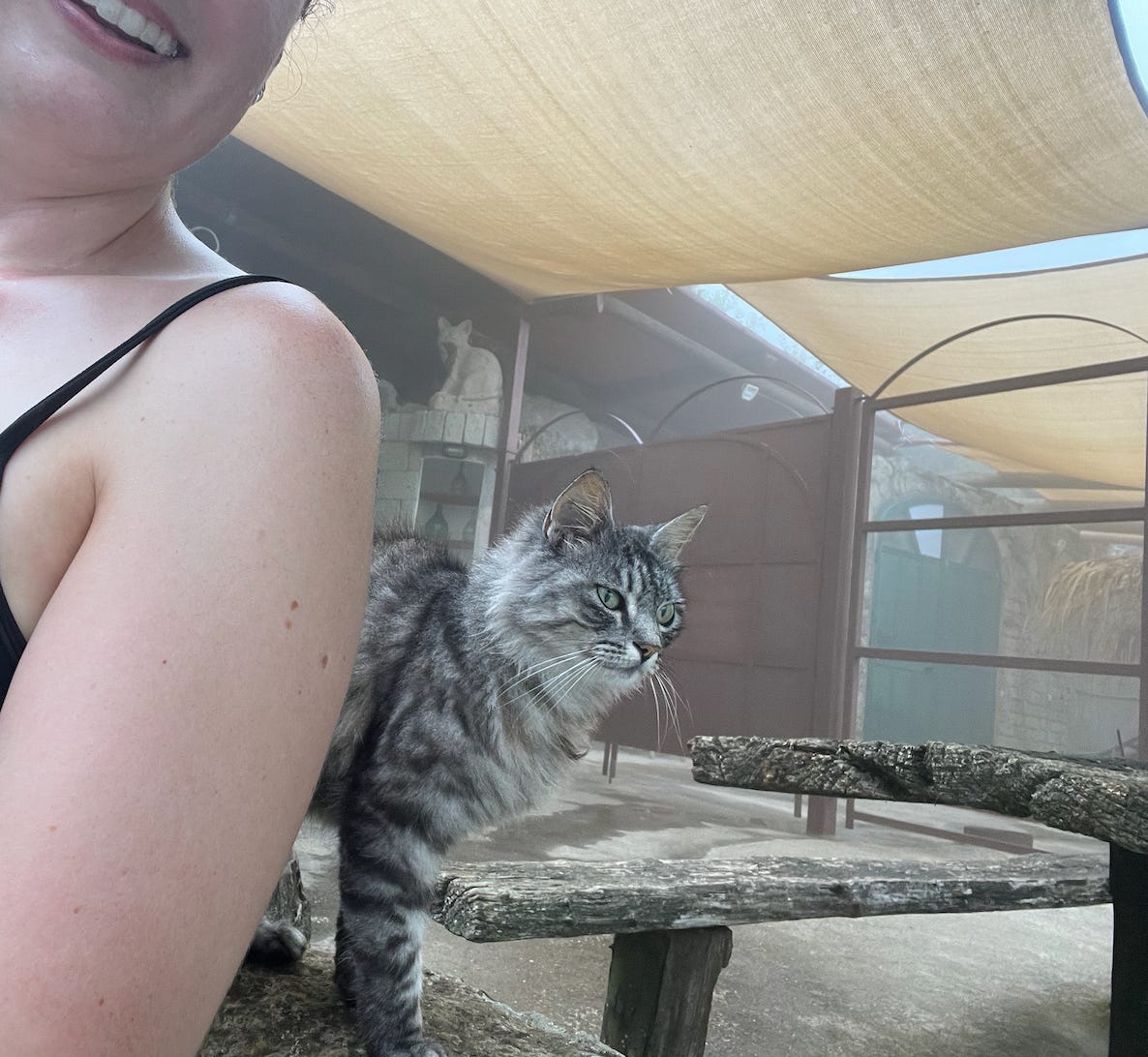
We ate at the restaurant just below the peak: oily spaghetti with pine nuts and garlic and raisins (a little weird, but trust it hit the spot in the moment) and a Coke with lemon and lots of ice. Later, a cappuccino. A very wise-looking cat that we’d met on the way up was still there on our way back down.
When we got back home after our trip, I thought: Why don’t we hike more? We live in New York, which is a great state to live in for so many reasons, just one of which being that it has nearly every kind of landscape one could ask for: big city, golden sand beaches, hills and mountains and forests. There’s all this hiking nearby and I already have a backpack and boots, and yet I never make the time for it.
We looked at threads dedicated to car-less hiking trips near NYC and picked a route. I went to the REI in Soho—the only REI in the city—and bought a pair of hiking pants and some coconut-and-pineapple-flavored salt chews. In the Re/Supply section, an area of the store dedicated to returned, mildly defective, and lightly used gear, I found a merino wool headband for $10. We even bought a portable camping stove and a dehydrated meal to take with us in order to learn how to cook outdoors. I kept thinking: Thank god for REI. It made the foreign terrain of the outdoors feel just a little bit more navigable.
Four days before our hike, there were rumblings on r/REI that the Soho store was closing. The news was confirmed the next day.
David and I sent crying emojis to each other. Another friend texted to say it felt like his “heart has been ripped out.” We were all sort of joking. And also not.
I went back to the store the next day to buy a dry pack for our hike—the forecast had changed, and was now threatening rain. I knew where the rain covers were—on the top floor, all the way at the back—and yet, I went downstairs first, looping my way through the aisles to give everything in the store a touch, trying to memorize the way everything felt. Just how lightweight is this jacket? What does a silk sleeping bag liner feel like? Is this merino base layer itchy or not? I have a list of outdoor gear I’ve been wanting and have been slowly saving up for, bit by bit. I assumed REI would always be there as I was ready to whittle down my wish list. Now I know it won’t be. In just a few months, this won’t be here anymore—NYC’s most solid bridge to the outdoors blown up, just like that, like the Kosciuszko. There won’t be an easy way to get a feel for these things.
I know this seems melodramatic. It’s just a store! It’s just another place that wants your money! How can someone be so upset about any kind of capitalistic enterprise! Put simply, it’s the only store in NYC that makes going outdoors feel accessible, at least to someone like me, who doesn’t really have experience with camping or hiking, and has always been a little afraid of and overwhelmed by it. There’s so much to get wrong. Not knowing how to navigate without a phone, buying the wrong kind of gas for your portable stove (as I did…), not adhering to proper safety measures in bear country, not following Leave No Trace guidelines—these things can cause harm to the earth, to wildlife, and to oneself.
REI is one of very few retail stores where the associates are worth asking for help, and better yet, their opinion. They’re incredibly knowledgeable and never pushy, which is a sort of holy grail in the retail world that is almost impossible to find. It’s a store, but it’s also a place to learn. In fact, REI is where I learned how to choose a sleeping bag and a backpack, how to pack said backpack, how to (at least in theory) build a campfire and how to safely extinguish it.
It’s the kind of store that reinforces the idea of a store in general, as a place you can go to learn something and make an educated purchase that will not need to be replaced for a very long time, if ever. It’s a store that believes what is broken can be fixed instead of thrown out (I mean this in a literal way, but there’s also a beautiful metaphor there). There’s an air inside REI that makes anything feel possible and also fun. The outdoors is where we’re meant to be.
The loss of REI is especially sad considering that there is no real equivalent waiting in the wings to take its place. There’s Paragon Sports, which isn’t as niche. There’s Amazon, but I don’t shop on Amazon, and haven’t for well over 10 years now. A lot of the individual brands at REI have their own stores in NYC, like Arc’teryx and Patagonia and The North Face, but REI was great for how it put them all in one place. There’s Outlandish—a Black-owned outdoors shop, the only of its kind in all of Brooklyn—but Outlandish is small, where REI reached near-suburban levels of consumerist sprawl. I could order big packages of things online with the intent of returning whatever isn’t to my liking, but I try not to do that, especially with larger items, because of how wasteful shipping is.
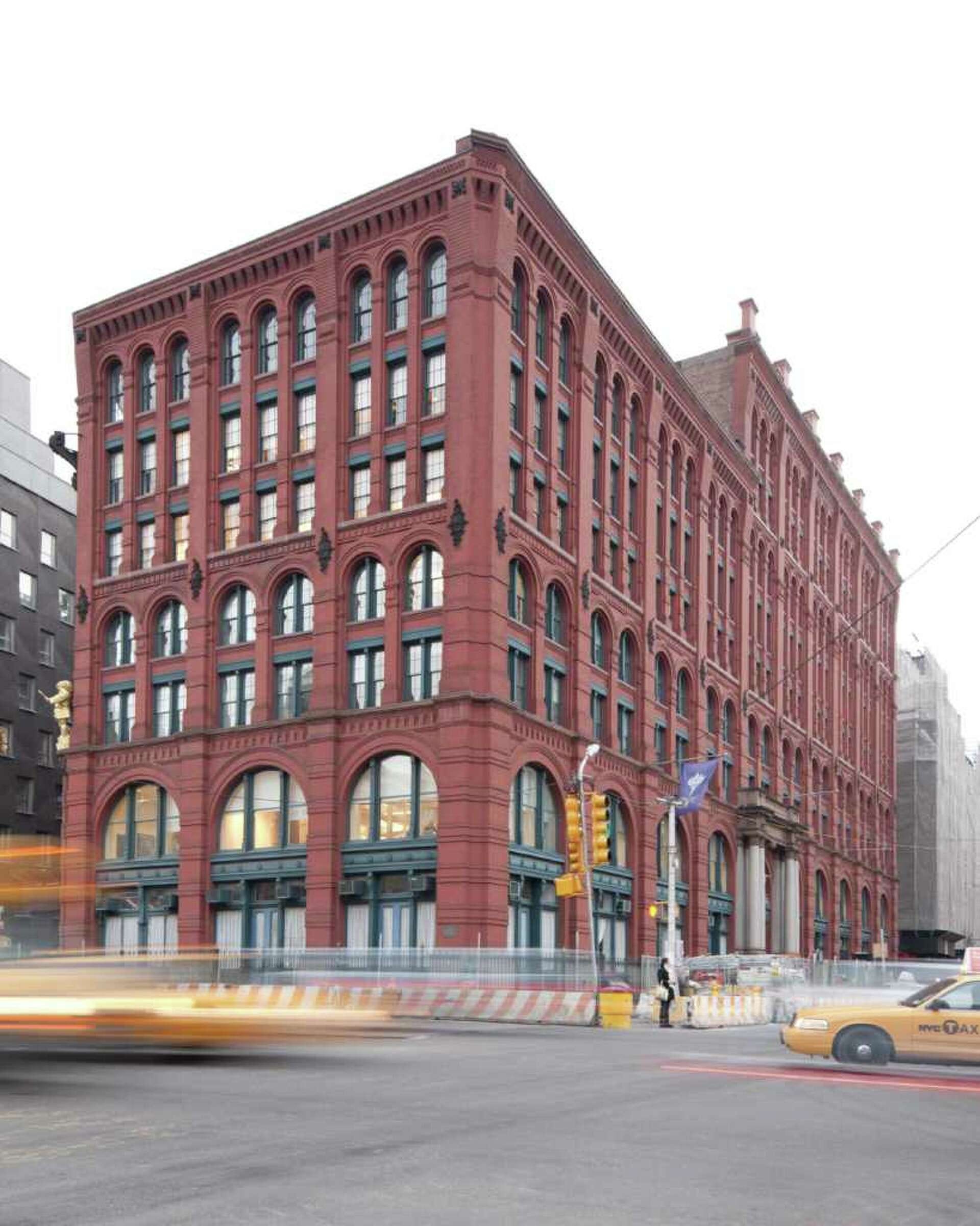
What is likely waiting to take over REI’s space—the beautiful historic Puck building—is another part of what makes this loss so depressing. It isn’t likely to be a bookstore (McNally Jackson, this would have been perfect for you!), or another store that engages in some kind of consumer education programs like REI did, or a space that enriches the neighborhood in any way. Instead, we’re likely to see another LVMH flagship store, maybe a streetwear brand, or a restaurant that will charge $28 for a little gems salad. It won’t be a space that gives back in any way, to the people or to the environment.
Third spaces have become all but extinct in NYC, leaving us to gather in spaces of commerce. This leaves us with two options:
“Giver stores”: places of commerce that undeniably exist to capture our money but do, in the process, give back in at least some small way.
“Taker stores”: places of commerce that exist to capture our money without giving anything back to the city, its people, or the world.
What will take up residence in the historic Puck building post-REI will definitely not be a third space, and will also not likely be a giver store; taker stores are increasingly becoming the only ones that can afford NYC rent.
Sometimes I think about “dead Internet theory,” the conspiracy theory which posits that the internet is mostly made up of artificial content and bots as part of a larger effort to “control the population and minimize organic human activity.”1 Well, what if we thought about what’s happening in NYC as something like “dead city theory”? Is the rapidly accelerating move away from giver stores to taker stores not, in a way, a step toward artifice? And does this artifice not tamper down our ability to see our friends and gather with like-minded people with any sort of financial ease? That in mind, can you really look at the loss of these spaces as anything but an attempt at population control (who “deserves” to afford to live in NYC?) and the minimization of organic human activity (who “deserves” to gather)?
In dead Internet theory (DIT), the larger presence is sometimes our government, sometimes foreign governments, and what they are fighting for control over is our minds, our beliefs, and our freedoms. They are fighting to get us to oppress ourselves to make their own jobs easier. In dead city theory (DCT), the larger presence is luxury retail and real estate, which is basically just one step removed from the government, and the thing they are fighting for is our wallets, which are of course inextricably also linked, under capitalism, to our minds, beliefs, and freedoms.
What the loss of REI also clarifies for me is the myth of individual choice under capitalism. When people choose to shop at places like Amazon and Walmart, they believe themselves to be making a personal choice that affects only them, as if economic choice can be made in a vacuum. Every dollar given to Amazon and Walmart ends with a portion of those proceeds being given to interests that directly work against our freedoms. Both corporations and their wealthy CEOs donate money to Republican politicians that vote against a woman’s right to choose, childhood education on slavery, and on LGBTQ+ equality measures. Both support candidates that deny the results of the 2020 election. Both support measures to weaken labor rights and protections.
Shopping on Amazon and Walmart is a personal choice until smaller competitors can’t keep the lights on anymore. When these stores shutter, it rips away everyone else’s ability to choose where they spend their money. In the absence of choice, even more money gets funneled into their reserves, which again, is money that directly goes toward denying us basic freedom and rights.
When stores close, it also affects the jobs that are available. Where will the incredibly knowledgeable retail associates at REI go? I hope they’ll go to Arc’teryx and Patagonia and The North Face, but I worry they’ll mostly end up in the Amazon warehouse in Red Hook.
A few weeks ago, David and I were watching TV (we just finished season thirty three of Survivor…) when a commercial for Amazon came on. Except it wasn’t a commercial to sell anything; it was instead a commercial extolling the virtues of working for Amazon. “I don’t think I’ve ever seen a commercial for a job,” David said. I wanted him to be wrong, and searched through the annals of my mind for another example. Maybe a pharmaceutical commercial? Maybe McDonald’s? Anything? But not a single other commercial of the sort came to mind.
Excluding the militaries of India, the USA, and China (god, how bleak), Walmart and Amazon are the top two employers, respectively, in the world. With every small store that closes, we shove more and more workers into their hands. The less options workers have, the more power Walmart and Amazon have to treat their employees worse than they already do.
So like DIT, we barely need anyone to oppress us; we’re apparently keen to do it to ourselves.
REI was not perfect. It was intensely anti-labor (there’s been speculation that NYC is closing mainly because it’s one of only two unionized locations), despite it being beyond pathetic to claim to love the earth and yet not give a shit about its stewards—the unionized associates were the people who made the store worth shopping at in the first place. But REI was a place that allowed for learning and gathering, and it was at least a place that did not use our money to actively campaign against us.
It’s been clear for a long time now that it’s incredibly difficult for small businesses to stay open in NYC—the barrier to entry is so high, the path to long term viability and profitability so obscure and unreachable. But the closure of REI feels like a development, or a bellwether, even. If a medium-sized chain like REI can’t stay open in NYC, what will that leave us with?
To be clear, I don’t think New York is a dead city. New York isn’t “over.” I don’t think the internet is dead either. But both are filled with a lot of garbage that’s of no real use to anyone, and day by day, they are filling up with more refuse still.
Where do we put it all this garbage? Where can we put this down?
Wiki page for Dead Internet Theory
I would weep if my REI closed